Articles
Data Center Trends for 2026
Record-Low Vacancy and Heavy Preleasing Leave Little Capacity for New Demand
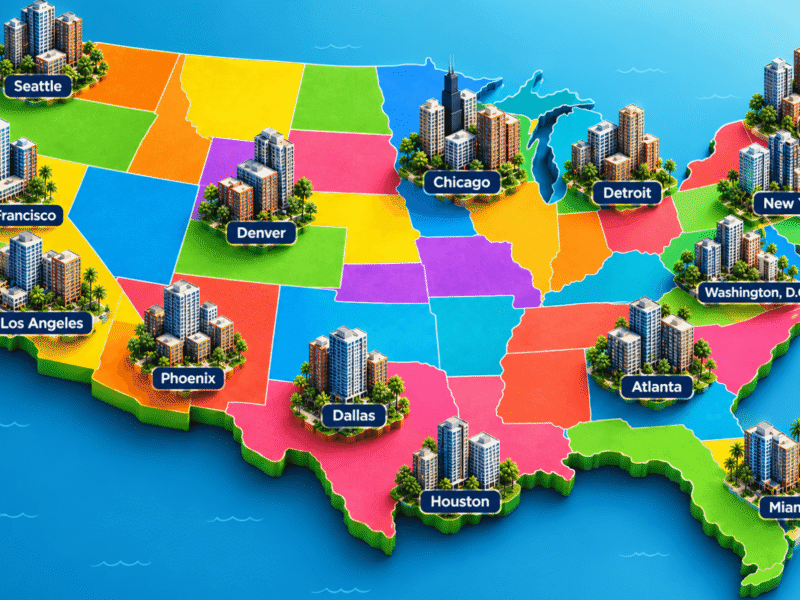
The U.S. data center market entered 2026 with exceptionally strong operating fundamentals as artificial intelligence, cloud computing, and increasingly data-intensive applications accelerated demand for capacity. Vacancy across primary North American markets fell to a record-low 1.4% at year-end 2025, while net absorption reached approximately 2,498 megawatts, surpassing the previous record of 1,810 megawatts established in 2024. Available capacity remained limited across most major markets, with vacancy below 2.5% in Northern Virginia, Atlanta, Dallas-Fort Worth, Chicago, Phoenix, and Hillsboro.
Supply under construction is also being committed well before completion. CBRE expects the preleasing rate for U.S. data centers under construction to reach approximately 80% during 2026, materially above the historical range of 40% to 50%. For investors and lenders, this preleasing provides meaningful income visibility, although lease security remains dependent on tenant credit, timely power delivery, and completion of increasingly complex facilities.
AI Capital Spending Is Creating an Infrastructure Investment Supercycle
The scale of capital flowing into AI-related data center real estate represents a fundamental change for the sector. Estimated AI-related data center real estate spending by major technology companies, including Google, Meta, Apple, Amazon, Oracle, and Microsoft, increased from approximately $250 billion in 2024 to $448 billion in 2025. The reported annualized pace for 2026 approaches $750 billion, excluding servers and other computing equipment.
These expenditures are supporting hyperscale campuses, powered shells, utility infrastructure, land acquisitions, and specialized facilities capable of hosting high-density computing. JLL estimates that global data center capacity could nearly double between 2025 and 2030, reaching approximately 200 gigawatts. Accommodating that growth may create roughly $1.2 trillion in real estate asset value and require approximately $870 billion in new debt financing. When tenant expenditures for GPUs and networking infrastructure are included, total data center-related investment through 2030 could approach $3 trillion.
The magnitude of these commitments is expanding opportunities for developers and capital providers, but it also raises underwriting concerns. Projects are larger, more technically sophisticated, and more dependent on a relatively concentrated group of tenants. Investors must evaluate whether proposed capacity is supported by enforceable leases, creditworthy occupants, deliverable power, and realistic construction schedules.
Colocation Demand Extends Strength Beyond Hyperscale and AI
Although hyperscale and AI deployments are driving much of the sector’s growth, demand for colocation space also remains exceptionally strong. Many enterprises continue to require hybrid-cloud connectivity, disaster-recovery capacity, network interconnection, and smaller-scale deployments that do not warrant dedicated hyperscale facilities. As a result, colocation vacancy remains near historic lows in major North American markets, broadening the demand base beyond the largest technology users. This distinction is important for property performance and valuation. A diversified colocation facility may serve many users with different deployment schedules and infrastructure needs, reducing reliance on a single hyperscale lease while creating more operational complexity. In supply-constrained markets, well-connected colocation assets should continue to benefit from limited availability, particularly where they can offer dependable power and access to dense network ecosystems.
Legacy Enterprise Facilities Face Uneven Obsolescence Risk
Traditional enterprise-owned data centers face a different outlook. Many corporations are migrating workloads to public-cloud platforms, colocation providers, and managed hosting environments to reduce capital expenditures and improve operating flexibility. This shift is weakening long-term demand for some older, single-user facilities and increasing functional-obsolescence risk, even as the broader data center market remains supply constrained.
Building age alone, however, does not determine competitiveness. Older facilities with strong fiber connectivity, network density, expandable power infrastructure, and practical upgrade potential can continue to attract users and investors. Conversely, properties with limited power availability, outdated building systems, or weak network ecosystems may struggle to compete. Some older facilities are being repositioned as colocation centers, edge data centers, or specialized digital-infrastructure assets. Successful conversions depend on whether the existing site and improvements can economically support modern power density, redundancy, connectivity, security, and operating requirements.
Power Availability Will Increasingly Separate Viable Sites from Speculative Ones
Despite strong demand, the amount of capacity under construction in primary markets declined from approximately 6,350 megawatts in 2024 to 5,994 megawatts at year-end 2025. The decline did not reflect weakening tenant demand. Instead, permitting delays, zoning obstacles, equipment lead times, and limited power availability prevented many proposed projects from advancing. Grid connection timelines now exceed four years in some primary markets, and available utility capacity is largely committed through 2030.
These constraints are shifting value toward sites with near-term power access and credible development pathways. They are also encouraging natural-gas generation, battery storage, renewable energy, and “bring your own power” strategies. For valuation purposes, land should not be underwritten as data center land solely because it is properly zoned or located near fiber. Its premium depends on the timing, quantity, reliability, and cost of deliverable power, as well as the property’s connectivity and realistic upgrade or development potential.
KEY MARKET TAKEAWAYS:
Data center fundamentals are likely to remain favorable as AI inference, cloud migration, digital services, and sustained colocation requirements support continued demand. Limited vacancy and heavy preleasing should reinforce rental income and development interest, particularly for facilities offering large, contiguous blocks of power or strong network connectivity. Many enterprises continue to require hybrid-cloud connectivity, disaster-recovery capacity, network interconnection, and smaller-scale deployments. As a result, colocation vacancy remains near historic lows in major North American markets. The outlook is less uniform for legacy enterprise facilities, with some exceptions, and largely dependent upon redevelopment potential.
Keep Reading
More Insights
September 29, 2026
U.S. Apartment Market Moves Toward Balance as Demand Outpaces New Supply

September 29, 2026
U.S. Manufactured Housing Fundamentals Remain Strong as Affordability Pressures Reshape Demand

September 29, 2026